Heating
Furnace installation and replacement in Idaho Falls
A furnace here works hard for most of the year, so the replacement deserves a careful choice. This page walks through the decisions an independent contractor will put in front of you.
You talk to an independent HVAC contractor. Idaho Falls HVAC Repair does no heating or cooling work itself.
When replacing beats another repair
There is no fixed age when a furnace must go. These are the situations where most homeowners end up replacing:
- A cracked or corroded heat exchanger, which can let combustion gases mix with house air.
- Two or three significant failures in a couple of seasons.
- A blower, control board and inducer that are all near the end at once.
- Rooms that never get warm, which can mean the unit was sized wrong to begin with.
- An AC coil on top of the furnace that also needs replacing, so the work can be done together.
Sizing comes from a load calculation
A new furnace shouldn't be picked by matching the old one's label. Insulation, windows and additions change what a house needs. The standard method is an ACCA Manual J heat-loss calculation, with Manual S for equipment selection and Manual D for duct design.
Some local offices require it. Bingham County's permit checklist asks for Manual J, S and D on a residential mechanical permit for a furnace or AC change-out in an existing building. An oversized furnace short cycles; an undersized one runs nonstop through a cold snap.
Standard or condensing
Furnace efficiency is rated as AFUE, the share of fuel turned into useful heat across a season. The Department of Energy's furnace purchasing guidance lists 95 percent AFUE as the ENERGY STAR level for the northern region, and notes that every ENERGY STAR furnace is a condensing furnace.
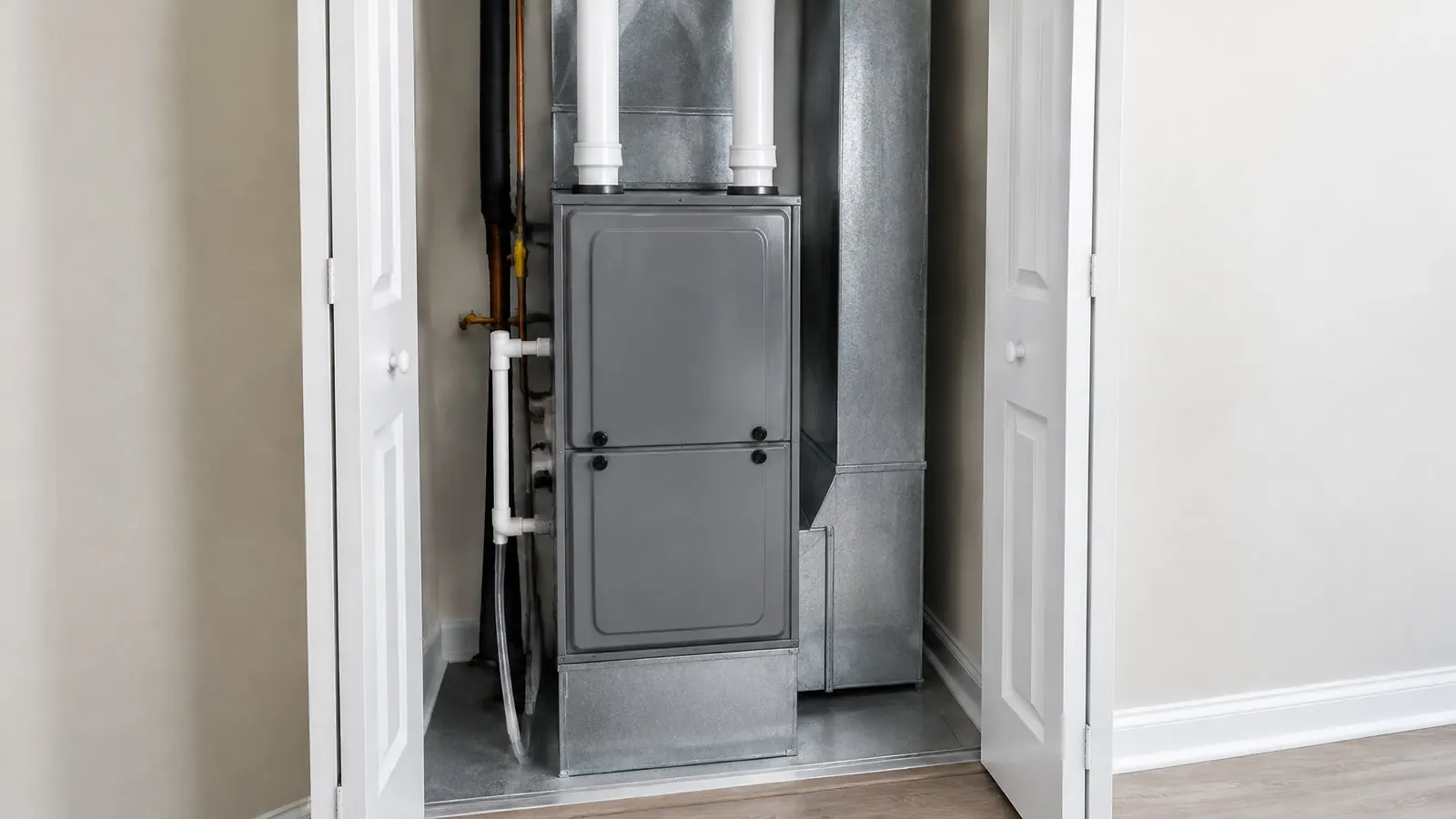
Condensing furnaces pull extra heat from the exhaust. They vent through plastic pipe, usually out a side wall, and produce acidic water that needs a drain. Moving from an older metal-flue furnace to a condensing one can mean new vent pipes, a condensate drain and a way to keep that drain from freezing.
Permits and inspection
Furnace replacement is permitted work. Inside Idaho Falls, the city's Building Division charges a double fee when mechanical work starts before the permit is issued. Ammon, Rigby and Shelley each handle it differently; the hiring guide sorts that out.
Idaho's HVAC rules (IDAPA 24.39.70) add a carbon monoxide requirement to the mechanical code: where permitted work happens in an existing home with a fuel-fired appliance, an approved CO alarm must be installed outside each separate sleeping area near the bedrooms. A furnace swap qualifies, so expect the contractor to ask where your bedrooms are.
What drives the cost
Prices come from the contractor after seeing the house. These are the things that move the number:
- Heating capacity and efficiency level of the new furnace.
- Whether the blower is single-stage, two-stage or variable speed.
- Venting changes: reusing a flue, lining a chimney, or running new plastic pipe to an outside wall.
- Condensate drain work and a pump if there's no floor drain nearby.
- Duct transitions, return air changes, and the gas line and shutoff valve.
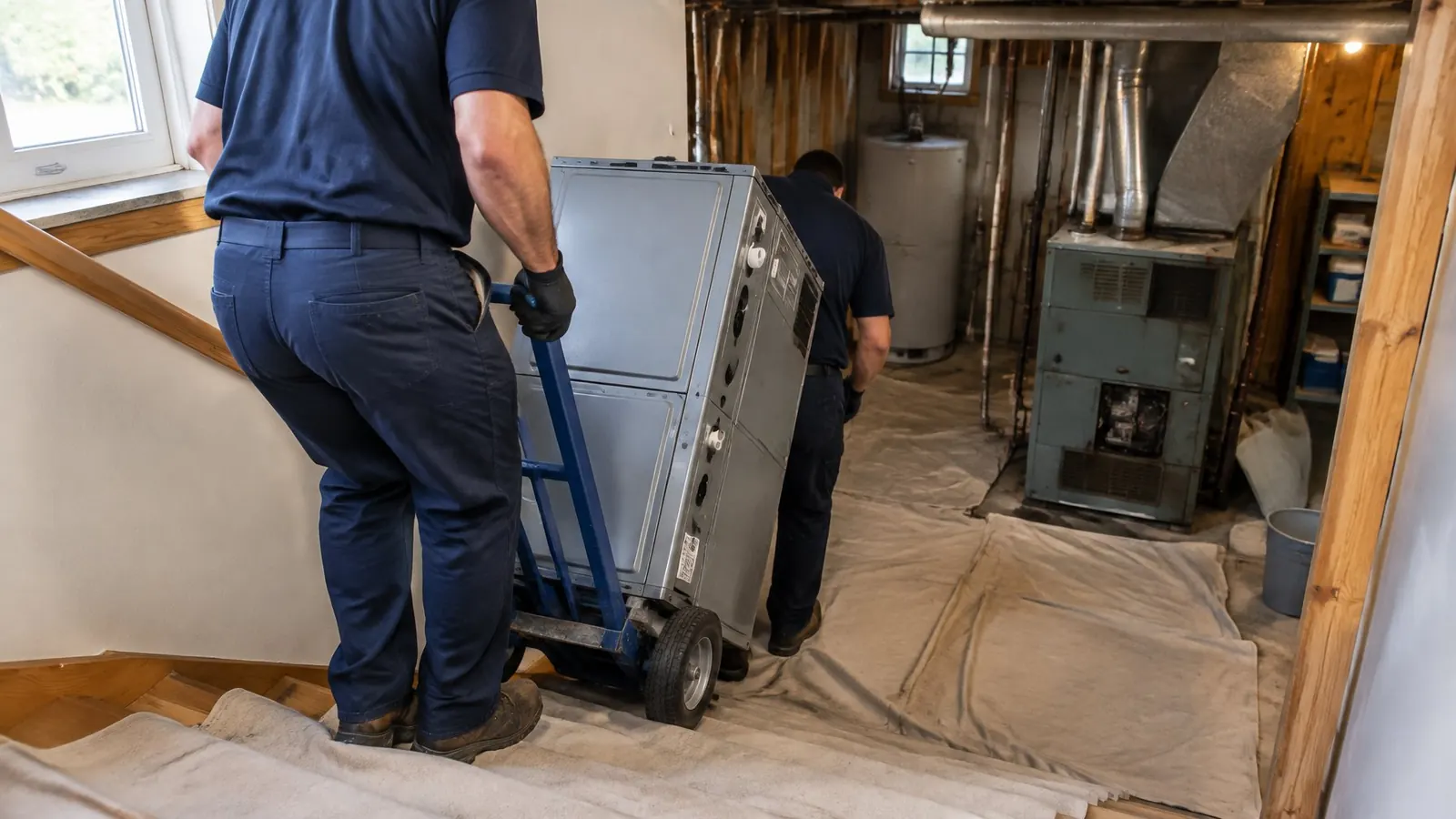
- Access: a tight closet or a steep basement stair takes more time.
- Replacing the AC coil, or the whole central air system, at the same visit.
- Permit, inspection and the CO alarm the rule requires.
Utility programs to ask about
Idaho Falls Power offers rebates and zero-interest loans to its residential customers for energy-efficiency work, and schedules home energy audits. Its service stops at the city limits, so homes in Ammon, Rigby or Shelley need to ask their own utility. Check the program terms before you sign a contract, because many programs want the paperwork started first.
A typical replacement, start to finish
Most single-furnace swaps follow the same order.
Assessment
The contractor measures the house or reviews a load calculation, looks at the venting, ducts and gas line, and talks through options.
Written proposal
Model, capacity, AFUE, venting plan, drain plan, permit and anything left out. Compare proposals line by line.
Permit
The contractor applies with the office that covers your address. Idaho rules put HVAC permits in the contractor's name.
Install day
The gas is shut off, the old unit comes out, the new one goes in, and the vent, drain, gas and wiring are connected.
Start-up and inspection
Gas pressure, temperature rise and combustion are checked, then the inspector visits and tags the job.
Questions
Is this a good time to swap the air conditioner as well?
If the AC is old or uses R-22, it often makes sense, since the indoor coil sits on the furnace. The EPA says no new R-22 has been made or imported since 1 January 2020, though existing systems can still be serviced.
Can I keep my old ductwork?
Usually, if it's sized right and not leaking badly. The contractor should check static pressure and the return air path.
How long does a furnace swap take?
The contractor sets the schedule. A straightforward like-for-like swap is often a one-day job, while venting changes add time.
Does a heat pump make sense here?
A ducted heat pump paired with a gas furnace is one option some homeowners ask about. Given how many hours the furnace runs, ask for the furnace-only option and the paired option side by side.
Cold house, warm house, or a system on its last legs?
Dial, mention your town and describe what the equipment is doing. An independent HVAC company that takes jobs around Idaho Falls picks up.